Showing posts with label Guest bloggers. Show all posts

Tuesday, 3 November 2015

Wader Quest - an introduction by Rick and Elis Simpson

Wader Quest is a charity that aims to encourage more people to get involved in Community Wader Conservation projects by highlighting the need for such projects and for those that can’t get directly involved, to do so indirectly through Wader Quest.


I have been a birder nearly all my life - some 50 odd years, in that time life has become less tolerable for birds and not least among them the waders. While I have been alive 60% of the intertidal zone in the Yellow Sea has been destroyed, Lapwings have tumbled by 50% in the UK and now 48% of all known wader populations are in decline. The realisation that all is not well with the waders is a relatively new one, we watched from the sidelines as the Slender-billed Curlew slipped through our fingers, only reacting when it was too late.


Northern Lapwing 50% decline in the UK in 30 years

It was the Spoon-billed Sandpiper that brought everything into sharp focus, it became an iconic symbol of all that was, and is, going wrong and in looking at the threats which were nudging it ever closer to extinction, we realised that the same threats were also having a devastating effect on other previously common wader species.

Spoon-billed Sandpiper, Thailand.

If you were to go out into your local high street and stop 100 passers-by and ask them to name a natural environment that was being destroyed at an unsustainable rate, of those that would have the slightest notion of what you are talking about (such is the disconnect between people and the environment these days) I can almost guarantee that 100% of them would cite rainforests in one form or another.

The chronic problem that rainforest face is unrelenting, it has been going on all my life, it has been widely publicised and has been given much attention by conservationists with varying degrees of success, however the same cannot be said of the intertidal zone and other, mostly wetland habitats, upon which our favourite birds depend. For many years, these have been swallowed up piecemeal, the cumulative effect of which has been devastating and it all happened under the radar. Only now, due to one little enigmatic bird, when the problem has become acute and pivotal, has it come to our attention; hopefully though it is not too late.

It’s easy to turn people onto forest conservation, not so easy when you are trying to save mud! Photo: Elis Simpson

With the aim of widening awareness about these issues, Wader Quest devised and created, with the support of Birdwatching Magazine, the Wader Conservation November initiative. This is a series of events designed to draw attention to the plight of waders around the world and what better way to start it off than a world-wide event?

On the 7th and 8th of November this year we are inviting people around the world to go out and look at waders. We then ask them to let us know what they have seen. For our part we will compile a list of the waders seen around the world and participants will have their name published on the Wader Quest website in a roll of honour. They will also be entered into a Prize Daw, the prize of which is a wonderful signed Lars Jonsson wader poster and a set of Wader Quest wader pin badges.

Does it matter if you don’t see a huge number of species? Does it matter if you just see common species? Not one bit of it, a contribution containing a single abundant species is just as valid as one with several exotic species and this is because it is the taking part that is important, by doing so you are saying ‘Yes! I care!’

Spoon-billed Sandpiper, Hooded Plover  and Magellanic Plover; our three main projects so far. Photo: Elis Simpson


We also have initiated the first ever wader festivals in the UK at two locations, the Wirral Wader Festival (14th and 15th November) and the Wash Wader Festival (28th and 29th November); both are celebrations of areas of immense importance to waders in the UK and it would be fantastic to see some NGB members there to help us celebrate.

As young people you will want to believe that as you get older there will still be places such as these to celebrate, Elis and I are passionate about our waders and will continue to fight for their collective survival for as long as we can and we hope that you will also want to do the same so that, when you are our age, you will still be able to share the swirling flocks of waders and the huge high tide roosts they settle down to become with the next generation of birders that will follow behind you.

We must not let this become a thing of the past.
Becoming a Friend of Wader Quest costs just £5.00 a year; we hope that this low rate will make anyone who wants to, feel they are able to be part of our growing community of wader loving friends. Wader Quest is totally voluntary and 100% of all donations and Friends’ fees are used to assist lower budget wader conservation and research projects.

WADERS NEED LOVE TOO


Friday, 30 October 2015

#Inventabird – The Unspeakable Truth - by Robert Yaxley


Embedded image permalink
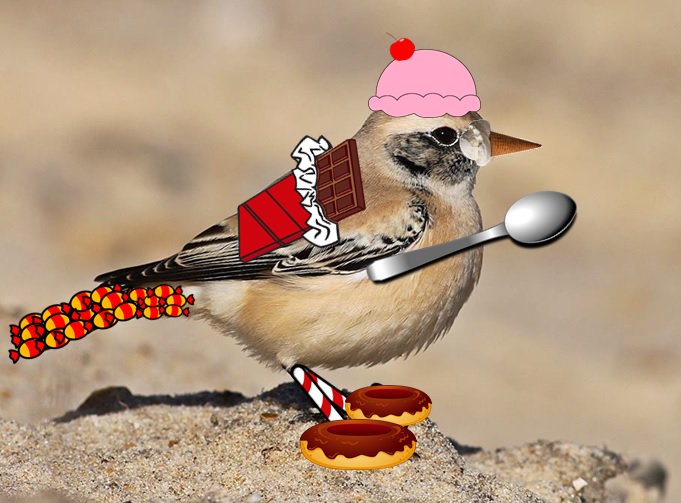
Those of you who enjoy messing around on Twitter might have seen my attempts to rewrite Darwin’s theories by inventing a few bird species of my own. Thankfully, a few other crackpot mavericks – I mean ornithology enthusiasts - have joined me, united by the #Inventabird hashtag. Creations have been diverse, including the Money Buzzard, Dessert Wheatear, Black-throated USB Driver, as well as my own Shearwater Tit, Narwhal Sandpiper, Granny Knot, Fish-tailed Cowcreeper etc. My 9yo daughter has been inspired too, and has contributed with the Spager, a desert waterbird.

My inspiration, such as it is, came from a dream a few years ago. It went a bit like this: I was birding on Fair Isle with some friends, scouring the nooks and crannies for tired migrants, when someone fervently screeched “LOOK! IT’S BRITAIN’S FIRST CURLY WARBLER!!” Of course, I raised my dream Swaro’s, and there it was, a Cetti’s Warbler relative with a bubbly perm hopping around on the floor. And then I woke up, bedclothes akimbo...

 After all, why has Evolution given us the Sunbittern and the Kagu but not the Funny Tern or Swiss Toni’s Warbler? Nature decides, and as a result we are denied the Pants Falcon. So, I thought, why not make it happen? In all honesty, I also wanted to rediscover some of my drawing skills which I had let lapse several years ago, and this seemed an ideal way to get back into the drawing habit. It is really quite amazing how much you can learn about birds from drawing nearly-but-not-quites. I have been experimenting with various media, but at the moment quite enjoy using a fineline pen. Some birds, however, need colour, such as the beer-bellied sandgrouse (flesh pink) for which I have used watercolour pencils.

So – here’s a few images – enjoy. #Inventabird is, as always, a broad and welcoming community, so please feel free to add a few of your own!
Embedded image permalink Embedded image permalink Embedded image permalink Embedded image permalink

Even some NGBs got involved with #Inventabird

Drew Lyness' Dessert Wheater is a personal highlight.

Embedded image permalink

Wednesday, 9 September 2015

A birding guide to Israel - Yoav Perlman

Birding in Israel – where action never ends

First of all, let me introduce myself. I am a birder since the age of 8, and all my adult life I worked in conservation, birding and research, for a large NGO in Israel, the Israeli Ornithological Center. I grew up as a birder in Israel which is one of the most extraordinary places in the Western Palearctic. From a very young age I got exposed to powerful wildlife phenomena. I can still remember vividly my first visit to the famous North Field near Eilat when I was ten – I got off the bus and was in awe – the alfalfa field was literally moving with thousands of Yellow Wagtails, Red-throated Pipits, Ortolans, Whitethroats and Quails. A couple of years later I showed the late Peter Grant his first Black Bush Robin there. Or when I was fourteen I experienced my first BIG Lesser Spotted Eagle day – I participated in the annual raptor count and one day, east of Tel Aviv, 23,000 eagles passed over my head in about four hours. At some moments the sky was black with birds. Back then Israel was so under-watched, and I started finding my own rarities when I was very young. 

I am here in the UK now, doing a PhD at UEA, working on Great Bustards in Iberia. I enjoy UEA very much, and in fact it's an NGB hotspot, with several young excellent NGbirders working the university grounds daily. While here in the UK I go birding less often than I would want to, but I do enjoy what the North Norfolk coast has to offer.

So what is it that makes Israel so special to my eyes? I think that the combination of adrenalin rush of migration almost year-round, several Middle-Eastern specialties, the extremely varied habitats in such a small area, the open and easy access, and the good chances to find one's own rarities. I think Israel is a must-do birding experience for young birders, as it gets you tuned in quickly on species that are on the cards in your local patch in the UK (well, if you live in Norfolk or Yorkshire maybe) – Isabelline Wheatear, Eastern Olivaceous Warbler, Red-throated Pipit, Masked Shrike – all are common migrants in Israel. And after a season in Israel you should be able to tell a Honey Buzzard from a Common Buzzard two miles away, or a Lesser Spotted Eagle from a Steppe Eagle just by jizz. 

Spring

So what is the best time of year to visit Israel? It’s hard to say, because year-round there are special birds to see. The most popular period is the second half of March and early April, for understandable reasons. In this season most birders head down to Eilat and the southern Arava Valley. This period offers an attractive combination of accelerating migration, peak breeding activity of desert species and lovely weather. Most birders drive up from Eilat to the Negev for a day or two to see the local specialties – MacQueen's Bustards, Cream-coloured Coursers, four sandgrouse species and some interesting larks.

Later on in spring it does become much warmer down in southern Israel, but migration doesn’t stop and in fact increases during April and into early May. For instance, this year during the May 2nd and 3rd, 450,000 Honey Buzzards were counted by the IBRCE survey team over Eilat! Now try and pick out the orientals passing through with them… Or what about a flock of 5000 White-winged terns in beautiful summer plumage roosting on the banks of the KM20 saltpans? Or just a nice stroll around Yotvata fields Caspian Plover, Olive-tree and Upcher’s Warblers, Black-headed Buntings…  Another advantage of arriving later in spring is that there are far fewer birders around and you basically have the place to yourself.
 
Caspian plover
Black Bush Robin
White-Winged Terns
Upcher's Warbler
 Accommodation in Eilat and the southern Arava is easy. Eilat is the main tourist destination in Israel and hosts a wide range of accommodation possibilities, from stinking flee-infested dormitories to extra-flashy five star hotels. Many birders choose to stay in B&B’s in kibbutzim north of Eilat, to escape from the hustle and bustle of the city, and to enjoy great birding literally at your doorstep. Lotan is popular, but Ketura is a great place to stay as well.


Summer

Later on the summer sets in but the birding goes on strong. Some species that are difficult to see any other time of year are at their peak in summer. One very popular bird is Sooty Falcon. This globally-threatened breathtaking raptor arrives back from its wintering grounds only in June, and peak breeding season is between July and September. Seabirding in Eilat is great in summer, mainly in July and early August. Daily observations of White-cheeked, Bridled and Lesser Crested Terns make the few hours of human temperatures great fun. Lots of skuas around, Sooty and Cory's Shearwaters, and the regulars: White-eyed Gulls, Western Reef Egret and Mangrove Heron make the time there quite enjoyable.

 
Lesser Crested Terns

White-Eyed Gull


In spring a birding trip up to Mt. Hermon, Israel’s highest peak, might be frustrating. Birds haven’t really started doing anything, there's still lots of snow on the ground, and one of the top species on birder’s list, Syrian Serin, doesn’t arrive before late April. But in summer all the local high-altitude species, including Crimson-winged Finch, Western Rock Nuthatch, Sombre Tit, Pale Rock Sparrow and the serin come to drink in huge numbers in the large pools below the lower cable station. 
Western Rock Nuthatch
In recent years, summer months have become the most exciting for mega rarities in Israel. Only this summer produced Israel’s 1st Senegal Thick-knee and other megas such as long-staying Bateleur and Pink-backed Pelican, and in recent years also several Yellow-billed Storks, Lesser Sand-plovers, and more.
Lesser Sand Plover

Autumn 

In autumn migration dynamics are slightly different to spring migration. While spring birding in southern Israel seems to be more attractive, in autumn the focus moves north. First of all, the massive raptor migration route passes in autumn over northern and central Israel, while over Eilat and southern Israel much smaller numbers pass (not more than several thousand raptors a day, not too busy..). Peak migration of Honey Buzzards is in early September, and in late September and early October about 100,000 Lesser Spotted Eagles and 60,000 Levant Sparrowhawks pass through. There is no other place in the world where you can see such large concentrations of these two species. Passerine migration is massive from early September. Shrikes are everywhere (Red-Backed, Lesser Grey, Woodchat and Masked), pipits, wagtails, larks, warblers, buntings, hirundines, the lot. The Bet Shean Valley is just packed with birds. From early October the Eastern flavour is better pronounced, as Citrine wagtails, Oriental Skylarks, Caspian Stonechats, Sociable Lapwings and Daurian Shrikes show in better numbers. Shorebird migration is not massive in Israel in the way of numbers, because there are no tidal mudflats in the eastern Mediterranean. However, numbers are compensated by quality- Greater Sand-plover, Marsh Sandpiper, Broad-billed Sandpipers and Temminck's Stints are all common migrants.

Oriental Skylark

Winter

The weather in Israel in winter is actually brilliant.There are some rainy days, sometimes quite heavy rain, but then it warms up again and you get beautiful days that you'd enjoy here in the UK as summer days. There are tons of birds around and lots of interesting species as well. The Hula valley is world-known for its bloody cranes, but in fact the Agamon Hula park holds lots more than cranes. It's a real hotspot for eagles, that concentrate there mainly to feed on dead cranes. Seeing 6-7 Greater Spots and 3-4 Eastern Imperials on a dead crane is not a bad experience. In recent years Black-winged Kite had colonized Israel and is easy to see in the Agamon. And the Agamon is a hotspot for wintering Daurian Shrikes, Citrine Wagtails, Caspian Stonechats and lots more. In winter the Bet She'an valley is incredible – huge numbers of birds everywhere. Richard's and Siberian Buff-bellied Pipits and Oriental Skylarks join the huge flocks of pipits and larks in the alfalfa fields. The valley is a hotspot for Pallas's Gulls – you can find a flock of 1000 in an empty reservoir.

In the open fields of the northwestern Negev several steppe species come to winter. It's a unique combination of species that congregates every year along the famous powerline south of Urim junction: Sociable Lapwings, Sakers, Eastern Imperial Eagles, Pallid Harriers and Dotterels, among the thousands of birds from commoner species.
Saker
Sociable Lapwing
Israel is not a great country for waterfowl, but we do have some specialties in winter, the most notable is White-headed Duck: about 10% of the world population winters in Israel, mainly in some reservoirs in the Jizreel Valley and in central Israel, where you can have concentrations of a couple of thousands.

So how to do Israel? 
Israel is a great country for independent birders. In Israel there is no such thing a private land, so basically you can go anywhere (just don't cross fences). Roads are great, car rental is rather cheap, and security is good – there are no restrictions to go anywhere. Birding information is easy. Everybody speaks good English, there's free wifi everywhere (!) and normally Israeli birders welcome foreign visitors and enjoy giving directions and showing around. A good source of information is www.birds.org.il with its linked Facebook page. You can also connect to the IMO 'RBA Israel' group and get notifications when in Israel. Most birds are easy to find yourself, apart for a couple of endangered night birds you need a guide for.
There are unique opportunities to work or volunteer in Israel. Because there are so few birders in Israel (less than 100 proper birders in the whole country) and even fewer ringers, foreign volunteers are welcome in several projects we run every year. The annual autumn raptor count takes place between late August and mid October. You can read here about the experiences of Luke Tiller who worked with us in 2014. Also in Eilat IBRCE resumed its spring raptor counts (they had an amazing year in 2015), and also do daily migrant monitoring - too much fun to be called work. Read about the experience of Doug Gochfeld here. You should ask Tim Jones about the awesome season he had in spring 2015 ringing at IBRCE – I am sure he can recommend it to any keen ringer. There are a few more ringing stations that can host foreign volunteer ringers.
I see myself as an ambassador of the Israeli birder community in the UK. For any questions, advice or comments, please contact me at yoav.perlman@gmail.com
Come and enjoy Israel, witness migration at its best, sharpen your ID skills with tricky species and sub-species, get a sun tan. You don't know how much I miss birding in Israel, so I'm sure you'd enjoy it massively as well.


Thursday, 22 January 2015

Chris Gooddie - My 'NGB Years'

By the start of the 1980s I was already a keen birder, and was twitching UK rarities whenever I could get a lift from friends who drove and could beg, steal or borrow a car. Finding out where rarities were before they departed was difficult before the advent of mobile phones and the web, but by swapping home phone numbers with other birders at twitches one could slowly build up a network of contacts across the UK to become a member of 'the grapevine'. Those contacts had produced results in 1981 and '82, and I'd added the odd cosmic rarity to my list, such as the UK's 7th Paddyfield Warbler at Walney Island, and the long-staying Glossy Ibis at Stodmarsh in Kent.

Another surefire way to get up to date information was to hang out in Cley, North Norfolk over the August bank holiday, and that strategy paid dividends too, not least because I was having breakfast with three friends at the legendary Nancy's Café on August 31st when news of a UK first - Little Whimbrel at Sker Point, South Wales - was phoned in. We drove west and scored the bird before dark, then climbed back in the car and drove overnight to Saltholme Flats in Teeside where we watched Britain's first ever Long-toed Stint feeding on the lagoon edge at point-blank range. After missing a Sooty Shearwater at Flamborough we were back in Norfolk by the evening of the 1st September to finish our week’s birding before heading home to Manchester, a round trip of just over a thousand miles.

However, despite such exploits a few of my more serious listing friends were still seeing more rarities than I was for one simple reason; they were spending a week or more in October on the Isles of Scilly. Thrilling tales of encounters with storm-driven American birds carried across the Atlantic by fast-moving westerly depressions whetted my appetite, and the more I listened in envy the more desperate I became to find a way to get myself down to the south-west in October. In the autumn of 1983 an old school friend Colin foolishly mentioned he might be up for it and could borrow a car. I figured no-one would miss us from our respective Nottingham University courses for a few days, and I worked on him until it became a reality. The die was cast and we drove down overnight, slept in the car at Penzance and presented ourselves at Penzance Heliport in plenty of time to catch our morning chopper flight.

Arriving at St Mary's Airfield we pocketed an invaluable photocopied A4 tourist map of the islands, picked up our bags and hopped onto the bus, which dropped us in High Town. A helpful soul had mentioned it was possible to leave bags at a place called 'The Porthcressa', so we asked for directions and had almost reached our destination when we came across a small crowd of birders peering intently at a stripy, yellowish, sparrow-like bird which was hopping about on the tiny strip of mown grass adjacent to Porthcressa Bay. 'What've you got?' I whispered to a bearded gentleman next to me. He turned and whispered a single word that took my breath away: "Bobolink." I exchanged a glance with Colin before we focused our bins on the bird, unable to believe our good fortune. We hadn't even had time to drop our bags off!

Within a couple of minutes a Scillonian dog scampered innocently across the sward, flushing the Bobolink, which flew off over Hugh Town. We silently cursed the mutt, but as things transpired the errant pooch had done us a favour. No sooner had we stowed our rucksacks downstairs at the 'Cressa than a shout went up; "RED-EYED VIREO. TRESCO!" We had no clue how to get to Tresco, but since a mass stampede immediately started through town we followed, and after a short sprint down the quay we just managed to squeeze aboard the departing boat which was already packed to the gunwales. Made it!

Once on Tresco we again followed the crowd, which quickly surrounded an isolated thorn bush backing on to one of the southern beaches. Ignorant of our mounting incredulity, there in the centre of the bush lurked a skulking Red-eyed Vireo, which popped its head out every now and then to reveal a whopping great white supercilium sandwiched between a matt grey crown and a thick black eyeline. Having never visited the USA it was my first experience of the family, and I was struck by its chunky build and rather sluggish movements.

After an hour or so the bird disappeared, and we reluctantly wandered up towards the other quay where we were to board the boat back to St Mary's. En route we skirted a large body of water on our right. I checked the map and said to my friend that I thought this must be The Great Pool, a key site that we had been advised was a key site to check for rarities. A few birders were loitering near the pool so we sidled over and nervously enquired whether there was anything about. "Well the Solitary Sand is still over there…" We jerked our heads in the direction of the extended arm and noticed a small, dark wader picking its way daintily around the edge of the mud. It was indeed a Solitary Sandpiper, and I hurriedly lay down, rested my right foot in the crick of my left knee, and in time-honoured style balanced my trusty Hertel and Reuss Tele-Vari 25-60x scope on the resulting prop. I scribbled largely illegible notes as fast as I could in my notebook, and when the bird flew a few metres noted with satisfaction the dark rump and barred sides to the tail. It really WAS a Solitary Sand!

The boat docked at New Grimsby quay bang on time, and we scuttled to the back and wedged ourselves into a gap between other birders. The thrum of the engine combined with our lack of sleep soon had our heads nodding, but we were awoken from our reverie when a second boat drew up alongside mid-channel. The two vessels were roped together, and our skipper announced: "Anyone who wants to go to St Agnes transfer here". What's on St. Agnes? I asked my neighbour. "Parula Warbler in The Parsonage. Oh, and a Subalpine". We checked our map, located The Parsonage and were soon stood at the back of the crowd. The gent next to us cheerfully informed us "You just missed it…it showed really well two or three minutes ago." He glanced at our crestfallen faces and added, "It's doing a circuit. It'll be round again in half an hour or so." 

We waited for a couple of hours, but the bird did not show, and despite further searching it was not seen again. We were appalled at our misfortune, but before we could get too down in the mouth another stampede broke out. We grabbed our kit and followed, trying to keep up and at the same time find out what we were running for. "Rose…" came the breathless reply from a fellow sprinter, but the end of his utterance was inaudible amidst his gasps for breath. I racked my brains but could not think of anything that would fit the bill except perhaps a Rosefinch or a Rose-coloured Starling. Both were new birds for me, but would either really have caused such mass panic? I managed to jog alongside a different runner for long enough to ask again what we were running for, and this time the whole of our mystery target's name was audible; "Rose-breasted Grosbeak!" We reached a sweating but thankfully stationary pack of birders and after a few tense minutes managed gripping views of the grosbeak gorging itself on blackberries.

After watching the bird for a while we checked our watches and realised there were only twenty minutes before the boat back to St Mary's. We were some distance from the quay, and the Subalpine Warbler had apparently not been seen for a while, so we reluctantly concluded we'd have to come back tomorrow and try again for both the Subalp. and the Parula. (Sadly, I failed on both counts and had to wait a few more years to add either to my UK list.)

Once on board we broke out the ‘Squashed Fly’ Garibaldi biscuits and celebrated in style, but our introduction to the magic of Scilly birding was not yet quite complete. As we entered the harbour a CB Radio crackled into life, and an uproar broke out at the front of the boat. We caught the word "Swallow" before being knocked aside as an entire boatload of birders attempted to clamber up the quay steps at the same time. Once back on terra firma we quickly established the cause of the furoré- a Cliff Swallow, the first for Britain, was currently circling around the dump catching insects. In record time we were alongside the incinerator and checking the hirundines. Barn Swallow…Barn Swallow…there! No, Sand Martin, false alarm. Barn Swallow…Barn Swallow…and then a flash of a pinkish-buff rump and a pale collar, and the Cliff Swallow was ours. It circled above us, sailing out over the rooftops, before swinging back in our direction, taking advantage of the last of the Autumn sunshine to feed up before settling down to roost in the bushes.

As darkness fell we retrieved our bags and tramped wearily up to the campsite. After a quick wash it was down to the bar on the quay for far more lager than was wise, chicken-in-a-basket and some decidedly inept games of pool. Between games we relived the day's highlights, celebrating our FIVE new American birds, both ecstatic to have confirmed for ourselves just how amazing Scilly could be in the Autumn. Over the coming days we added Gray-cheeked and Swainson's Thrushes and an Upland Sandpiper, plus a strong supporting cast of Richard's and Tawny Pipits, Rose-coloured Starling and Common Rosefinch to our UK lists. After five action-packed days we returned to the mainland, with enough time to make a short detour to St Just. There, flitting in a gloomy corner of a tiny copse, was a bird that remains right at the top of the list of birds I have seen in Britain - an American Redstart. It seemed to float like a butterfly in front of our eyes, flashing its yellow wing and tail patches as it flitted from one perch to another. The flourish at the end of the description in my notebook at the time was succinct: 'the best bird I have ever seen'.


Scilly in the 1980's and 1990's could be spectacular. Although the islands may be enduring something of a drought in terms of rarities in recent years, it seems likely that at some point the good times will return. Until they do, I have to admit that although I have made the pilgrimage to the archipelago on many subsequent occasions, I have never again experienced a day quite like my very first on Scilly.

-Chris Gooddie
Chris Gooddie is a keen birder and rarity hunter; UK finds to date include two Blyth's Reed Warblers, 3 Lanceolated Warblers, a Great Snipe, a Western Bonelli's Warbler and a Greenish Warbler. Chris is the author of 'The Jewel Hunter', a book documenting an attempt to see all of the world's species of pitta in a year, and is a serving member of the Oriental Bird Club committee. 

Sunday, 5 October 2014

Richard Crossley - My 'NGB years'

It looked bloody huge! Out in the Atlantic there was a dense pack of isobars and a massive, swirling mess. The weather had to be crazy out there and it was coming our way. I was 19 at the time and didn’t know that much, but this looked good. I made a couple of phone calls (no internet back then) and a prominent old-timer was predicting great things.

On Thursday September 1st, 1983, I packed my backpack, sleeping bag, coat and football kit (I had a game on Saturday) and hitch-hiked down to St Ives. I arrived in the evening and headed to my favourite barn and snuck in for a good night’s kip. Next day, was a horrendous gale with horizontal rain – I could stand behind the wall on St Ives’ island and the rain just went right over the top of me. I was a lot tougher - some may some more stupid - back then. I stuck it out there all day with my only reward being a distant, large shearwater and no other birders around. Clearly I had got it wrong! I went back to my lonely barn.

The next morning, I overslept and it was already light when I got up. I had to hitch-hike back to Okehampton for a 3pm kick-off, giving me a few hours to check if any birds had shown up. There were already about 60 birders there, the sun was out and the wind had dropped to a gentle 20mph. I was mortified – I’d already missed Sabine’s Gull, Great Shearwater and lots of skuas. But the disappointment soon turned to elation as, clearly this was going to be a day to remember.

Simply put, there were birds everywhere! The numbers never lie and even today, I don’t think there’s been another seawatch in Britain to touch it. Sabine’s Gulls were in flocks – 30 of them being fed bread by some of the birders. A passing Wilson’s Petrel soon showed up on the sewage outfall among the 5,000 Stormies now gathered there. Why would I want to look at the Pom that was called out while I was watching a Long-tailed? Then I realized that the Pom was just feet above our heads. Wherever you looked there were more birds – it became clear there wasn’t going to be any football match for me that day.


Not wanting to leave the rock, not even for food, I asked a couple of pals who were heading into town to call my parents and let the football manager know I couldn't make it. I asked them to make an excuse that I was sick. Somehow, the message got a bit skewed and my parents were dead worried that I was seriously ill in St Ives!

It was almost dark as most of us finally trudged away from the ocean. I clearly remember being absolutely knackered but, just like everybody else, having a smile like the cat that just got the cream. Sometimes, you just know that you were there – there was no doubt about this one. We all sat in the pub that night, very happy, writing field notes – some people writing up a South Polar Skua – something I don’t remember much about.


I feel very fortunate to have had many memorable days birding around the world and I've seen some of the most spectacular flights ever recorded, but September 3, 1983 will always be one of the highlights.
I’m looking forward to being back in England on a speaking tour in a few weeks – hopefully we’ll get another mega seawatch and I’ll see you there!

-Richard Crossley
Richard Crossley is an internationally acclaimed birder, photographer and award winning author of ‘The Crossley ID Guide’ series. Richard is also co-founder of the global birding initiative Pledge to Fledge (www.pledgetofledge.org), Race4Birds (www.race4birds.org) and The Cape May Young Birders Club. Richard is on the board of directors at the famous Hawk Mountain Sanctuary. He firmly believes that the time is right to popularize 
birding around the world.
http://www.crossleybooks.com/
http://www.pledgetofledge.org/
http://www.race4birds.org/
https://www.facebook.com/CrossleyIDGuide
https://twitter.com/CrossleyIDGuide

Wednesday, 1 October 2014

Mark Thomas - My 'NGB years'

I got off the train at Hull, the wind was cutting from the east, I quickly melted in to the crowd of commuters, I had a mission and it was the 10:20 train to Scarborough.
I made the connection; I sat tightly wedged in a corner, giving the best vantage point of everyone else on the train. The conductor came and checked my ticket, he stared at me but didn't say a word then walked away down the train. I was certain someone was going to discover what I was up to.

I should have been 100 miles away and most importantly at school!
There are certain days in your life that are momentous, days that you will never forget, days that make you what you are.

September 13th 1989 was THAT day for me. I had flirted with the Yorkshire East Coast for a few years, plaguing my dad to take me for the occasional day out birding, once in freezing conditions to see Little Auks off Barmston and another with some ‘grown up men’ from Sheffield when we saw a summer plumaged White-billed Diver off Flamborough (I remember the Peregrine directly over-head just as fondly).
However as a young birder these trips were too infrequent and the ‘coast’ was the holy grail, it taunted me when most of my time was spent birding a wood. Don’t get me wrong Anston Stones Wood was my classroom and hunting down Lesser Spotted Woodpeckers was every moment as tense as a September Locustella at Spurn. I learnt the basics and, most importantly, shared in those experiences with a small band of other young birders, we were ‘openly birders’ at school, we suffered the consequences but wore the badge with pride. School reports were full of rather negative comments from teachers, particularly about period 5-6 on a Friday, this coincided with Geography and all 6 birders in the same class together – this became our ‘cobra meeting’, where we planning the weekends birding adventure, in the wood!

So September 13th was the culmination of all of that, this was the biggest day of my birding life. Most of my ‘away from the wood’ activities had been at the hands of other people, today I was in control of my own destiny, and it felt just fabulous!

For several days a fall of epic proportions had been taking place on the coast, I had called Birdline each night, secretly from the upstairs telephone – remember that ? I had tried to quickly write everything down but had to call back to get the finer details, millionaires were being made on this habit!
I didn’t tell anyone, next I rang National Rail Enquiries and got all the train details. The adventure was on, I packed my bins and small spotting scope and set off the next morning in my school uniform. I kept telling myself it was a normal day, like hell! – it was Christmas and all my birthdays in one!

I got off the train at Filey and physically skipped along the cobbles at the bottom of Church Ravine. I headed in to the Country Park and sought out the single tall sycamore next to the housing estate, I then began meeting birders. I was at one, in the community, they didn't want to know where I had come from or what I was doing on a school day! I had reached THE tree, I breathed a massive sigh of relief, almost forgetting why I was even there. My daydream burst back to life with the shout ‘showing top right’, there was the most sought after Greenish Warbler ever! I watched it gleaning insects from the underside of the big sycamore leafs, it was calling, it was the field guide and much, much more. 
I remained with the bird for over an hour and then filtered my way along various hedges, taking in a confiding juvenile Red-backed Shrike. I retraced my steps and reached Church Ravine, here I joined another group of birders and enjoyed a Firecrest, Yellow-browed Warbler and a Wood Warbler all together! This really was my best ever day, thoughts turned to getting home and timing that with the finish of school.

Then suddenly the day took a massive turn for the un-expected, only 9 miles away down the coast birders had just found a Booted Warbler at Bempton. I caught the whispers and excitement. Suddenly a tall young birder offered me a lift to the bird, he was going now. I had come this far! I got in the car, he told me what he was expecting the bird to look like and the fact it was a new bird for him, he even asked if I had seen one before – I replied by saying that I was bunking school!

We pulled up and both jumped out of the car, little things like that made my day – I had finally met birders who were adults but acted just like kids! The bird was showing at about 30ft distance clinging to grass stems in a small hollow (dell) in the car park. It was milky tea colour (check the next cuppa you have!) and was rare, very rare! I had connected with this amazing bird because I had actively taken control of my own life - that was far more educational than anything I could have learnt at school that day. I quickly drew the bird in my notebook, the equivalent of the modern day DSLR! The drawing was poor but it didn't matter, it was my proof. I really could not have been any happier, nor could the other 50 people now present, such a positive scene, birds have the power to do that.
The finale was ‘calling in’ at Flamborough where I added Red-breasted Flycatcher and Barred Warred to the day, place and life list ! Both birds in the same garden opposite the lighthouse.

Time had slipped by and suddenly I panicked I was going to be late home from school, no fear this day was not going to let me down in any aspect, my secret driver (Chris Mills) was going back to Nottingham and was happy to drop me at the bus stop in my village on the outskirts of Sheffield on the way past.
I mentally locked myself in my bedroom at home and wrote up the day in my notebook, then promptly hid it! The next day at school, I was on a high!

At a very local level we had a new approach to birding, it took us ALL beyond the wood, on trips with the local RSPB group to Spurn were we all added Isabelline Shrike and thousands of Goldcrests, to being filmed on a TV programme about birding with the late Yorkshire celeb Michael Clegg, to actually being passionate career conservationists.

I am massively in support of NGB and AFON and encourage everyone to help in any small way.

-Mark Thomas
Mark is a Senior Investigations Officer at the RSPB, setting up protection schemes for rare breeding birds like Bee-eaters and also investigating wildlife crime and catching raptor killers. Away from work, Mark spends most weekends on the Yorkshire coast at his birding and ringing site at Buckton. Mark is fascinated by weather and migration. 
https://twitter.com/Bucktonbirder
http://bucktonbirder.blogspot.co.uk/

Wednesday, 17 September 2014

Stephen Moss - My 'NGB years'

What was birding like when I was young, back in the 1970s? In a word, boring. And lonely. And occasionally exciting. Yes, I know that’s several words, but I’m sure you’ll make allowances for age. Not that I feel any older than when I started birdwatching (as it was called in those far-off days). In fact I enjoy birding – and watching a whole range of other wildlife – far more than I did then.

The biggest difference is that in those days I didn't know any other birders – well, just one, of which more in a moment. I met a few lost souls, trudging along the windswept causeway at Staines Reservoirs, which for a few years – hard to believe I know – was the most popular birding spot in Britain, perhaps the world.

We used to exchange a few muttered words – “Anything about?” “No, nothing much. Yellow-bellied Sapsucker and Scarlet Tanager on Scilly, though.” That was about as sociable as birding got in those days.

Then I met Daniel. First day at grammar school, September 1971, and by some quirk of fate (and our surnames beginning with an M and an O and there being no Ns in the class) we were placed next to one another. Somehow the conversation got around to hobbies, and we discovered, to our amazement, that we both liked birdwatching.

Now remember this wasn't something you freely admitted to, unless you wanted to be shunned by your peers. But a few weeks later we met up one Sunday to go birding (probably at Staines Reservoirs, where true to form we didn't see anything), and later in Bushy Park near Daniel’s home in Teddington (where I do remember seeing Tree Sparrows, now long gone).

In those days kids were allowed – indeed encouraged – to cycle all over the place. So it was that at the tender age of 14 we spent a week camping on our own in the New Forest. From there we cycled the fifty-mile round trip to Stanpit Marsh to see a Ross’s Gull that was spending its summer holidays there. (I nearly wrote ‘twitch’ – but in those days the word was not yet widely used…)

We had heard about this incredibly rare bird (the 11th for Britain, as I recall) purely by a chance encounter with a birder at Keyhaven: “Anything about?” “Not really; just the gull.” “What gull?” “The Ross’s at Stanpit…” and so on. This, of course, was long before the days or mobile phones, the Internet, pagers or even Birdline, when the news of most rare birds was communicated by postcard. Yes, really.

We saw some other good birds too: Icterine Warblers, Rough-legged Buzzards and Great Grey Shrikes at Dungeness; and Richard’s Pipit, Lapland Bunting and Grey Phalarope on our first trip to Cley. Later I managed to visit Scilly at the height of the autumn migration (missing two weeks of school! Thanks mum!), where I saw three Buff-breasteds, three Pectorals and a Sharp-tailed Sandpiper – which I still haven’t seen again in Britain almost 40 years later.

The highlight of our teenage birding years was in late May 1975, when we stumbled across a male Little Bittern at Stodmarsh – a truly stunning bird. But the bulk of our birding was done at – yes, you've guessed it – Staines Reservoirs and the local gravel pits. Apart from regular Black Terns and Little Gulls in spring, Black-necked Grebes in autumn and Smew in winter we saw very little – mainly because in those days we didn't even have scopes!

Rather like going to war, birding back then was a combination of 99% boredom and 1% sheer terror and excitement. Just like today, perhaps – except that now even when there are no birds to see I can enjoy the butterflies and dragonflies on my local patch, something I had no interest in at all when I was a youngster. I have discovered the joys of watching common birds and wildlife as well as chasing rarities; but above all the thing I enjoy most nowadays is the people I have got to know through birding.

After more than two decades knowing hardly any other birders, I now know hundreds. They range from my childhood heroes such as Ian Wallace, James Ferguson-Lees and of course Bill Oddie, through my contemporaries, to the new cohort from groups such as Next Generation Birders and A Focus on Nature.

Watching the crowds of you enjoying Birdfair makes me both happy and slightly envious. I’m happy that after what seemed to be a period when hardly any young people were taking up birding or wildlife watching, there are now loads of you – and doing such great things that we could only dream about, such as blogging and filmmaking.

Envious, because in many ways I wish I was starting over again: able to take advantage of the social media, Birdfair and the fantastic facilities available to anyone taking up birding today.

But most of all, I feel a mixture of pride, relief and delight. Pride when you come up to me and tell me that you got into birding when you watched Birding with Bill Oddie or read one of my books. Relief that a whole new generation is now sharing my lifelong passion, which I hope will give you as much joy and satisfaction as it has brought to me. And delight that in the coming decades you’ll be around to make the case for why birds and nature should be at the very centre of our lives, now and in the future.

And by the way, I still go birding with my old friend Daniel. A couple of years ago we twitched the Paddyfield Warbler at Pagham Harbour (by car, not bike), about three months after it first arrived. Some things never change.

-Stephen Moss (Aged 54¼)
A lifelong birder, Stephen Moss had the good fortune to turn his hobby into his job, making wildlife TV programmes with the likes of Bill Oddie and Chris Packham, and writing books and newspaper and magazine articles about the natural world. He has travelled to all the world’s seven continents to watch birds, but now mainly enjoys birding around his home on the Somerset Levels.

For more memories of birding in the distant past, check out Stephen Moss’s This Birding Life. Then you’ll realise how lucky you are! For a more detailed history of birding, try A Bird in the Bush: a social history of birdwatching

Sunday, 2 March 2014

Andy Mackay - My 'NGB Years'

You will probably be familiar with the work of Andy Mackay even if you did not know it, since it was Andy who generously breathed life into NGB's image with our terrific Little Egret logo which now adorns many a tshirt, hoodie and even a bear mascot! Here he describes his blossom into birding at a young age and gives some tips to other young birders:


Had NGB existed 'when I were a lad' I'm sure I would have been an active and enthusiastic member. But it didn't of course, because for me, the 'NGB years' would have spanned 1978 to 1990, and the Internet had barely been invented then. Even by the time I was 25, very few people had computers.
                                                                                                      
At the age of 13, although I had been interested in birds for as long as I could remember, I knew no other birders and rarely did any birding outside of my garden, other than on family holidays and outings. I did have a decent pair of binoculars though, and had been a member of the Young Ornithologists' Club since the age of nine. But over the next 12 years my birding was to undergo huge changes...

YOC 'Bird Life' magazines + Kestrel badge
In 1983 the Shell Guide to the Birds of Britain and Ireland was published, and I bought a copy soon after it came out. See 'The Book That Inspired a Generation' on my blog for more on this. Another book I came across around this time was Bill Oddie's Little Black Bird Book. If you've never read this, I strongly suggest that you get hold of a copy and do so. Although it's mostly about birding/twitching in the 1970s, a lot of it is still highly relevant. Plus it's very funny. Like the Shell Guide, BOLBBB was a revelation for me. Strange as it seems now, I had never considered the idea that I might somehow find out about rarities and go and see them myself. I assumed that rare birds were only seen purely by luck, and always by other people!

The Shell Guide & Bill Oddie's Little Black Bird Book
The following year saw me taking further steps to becoming a 'proper' birder. In late August 1984 I made my first visit to north Norfolk. This was supposed to be a voluntary wardening fortnight at Snettisham, but thanks to the influence of a more experienced 'vol' who was there at the same time as me, it turned into what was effectively a birding/twitching trip at the RSPB's expense, much to the annoyance of the warden! In those two eye-opening weeks I had 16 lifers, including a Marsh Sandpiper at Cley. Not long after this, back in Leicestershire I met Jeff Higgott whilst birding at Cropston Reservoir, and he introduced me to both the local ornithological society and ringing, which I took up enthusiastically. I also started subscribing to British Birds around this time.

I now had not only a regular birding companion, but also that all important 'grapevine' contact. Prior to this I had never heard about anything interesting turning up in the county, with the exception of the Bridled Tern at Rutland Water, which I read about on the front page of the Leicester Mercury after it had gone! As well as local birding, we went twitching whenever transport was available. The highlight of this period was undoubtedly the Little Whimbrel at Salthouse in August 1985, still my longest standing British 'blocker', and the only one I have left from the 1980s.

Pen & ink drawing of the 1985 Little Whimbrel from my 'big notebook' of  the time
In 1986/87 I spent a year working as an assistant warden at Sandwich Bay Bird Observatory in Kent. This was another quantum leap in my birding, packing what would be several years' worth of experience for most people into just 12 months. And I could hardly believe that I was being paid to watch, count and ring birds every day. It wasn't all fun, of course; I've never been much of a morning person, so I never enjoyed getting up before dawn every day during migration periods, and you might not believe it, but even birding can sometimes become a chore when it's your job! But on the whole it was a great experience, and I would say to any young birder, if you get a chance to stay at an observatory, let alone work at one, make the most of it.

Stilt Sandpiper twitch, Cliffe, 1987. My Dad's Mk II Cavalier, Jeff's Hertel & Reuss scope, and my dodgy 80s hairstyle, glasses and moustache!

In 1990 I visited Scilly for the first time, and my British list, already over 300, shot up by 11 new species in a fortnight, including Black-billed Cuckoo, Upland Sandpiper, Swainson's and Grey-cheeked Thrushes and Isabelline Wheatear. All birds I had barely heard of 12 years earlier in pre Shell Guide days, let alone thought I'd ever see.

Grey-cheeked Thrush twitch, St Mary's, October 1990
And somewhere along the way I had become a full time bird artist and illustrator, mostly by accident it has to be said, having decided that doing a 'proper job' wasn't for me. But that's another story in itself.

Bluethroat cover of BB, April 1990
Throughout all this time technology was moving on, although we were still another ten years away from mass ownership of computers, mobile phones and digital cameras. But I think it's important to remember that, great as all this technology is, birding is essentially no different now to what it was 25, 50 or even 100 years ago. At its most basic, going out to watch birds with a pair of binoculars round your neck and a notebook and pencil in your pocket doesn't change, and that's what it's really all about.

-Andy Mackay
Andy is a freelance artist and writer, and the creator of the NGB Little Egret logo. Interested in birds since early childhood, he no longer twitches, but prefers to find his own birds on his local patch (Eyebrook Reservoir, on the Leicestershire/Rutland boundary) or further afield. If not watching, painting or writing about birds he is most likely either mothing, listening to Test Match Special or doing the Guardian crossword.

Thursday, 24 October 2013

Guest blogger: Jonny Rankin

Firstly with thanks to NGB for letting a last generation birder offer up a post to the Next Generation! The ethos behind NGB is solid and any celebration of nature is good news, especially when done by the young. As such I am delighted to be writing this.

A video I did for the RSPB last year offers a handy introduction to myself…

Just like Jonny from The RSPB on Vimeo.

Now we are acquainted I’ll continue.
Whilst I do go birding – in the traditional sense – it is also engrained. I put the bins round my neck when I walk the dog and mentally list on car and train journeys. If they haven’t already these obsessive behaviours will befall NGBs too – I am sure!
To me birding is as important and habitual as listening to metal and riding my bike.
Birding, especially over the last five years has been all about adventure. It has taken me 4170m up in the eastern Himalaya and high into the Arctic Circle well past 70° north. Closer to home it has led me to make truly great friends, meet my MP, write magazine articles and do guest blogs! All of which I enjoy very much… 
Another aspect that has developed more recently is fundraising, specifically for the RSPB and the multi partner Operation Turtle Dove. Through a Big Bird Race in 2012 (read about that on the Birdwatching Mag Site) and running my first half marathon earlier this year to date £600 has been raised. Along the way I also picked up a Turtle Dove tattoo!

A permanent Turtle Dove; a dream for future British summers
For next year three friends and myself are planning our most ambitious fundraiser to date. A 300 mile walk from Lakenheath RSPB to SaltholmeRSPB. We have called this journey Dove Step and hope to complete the distance in just 13 days, this requires covering up to 25 miles a day whilst also carrying our tents and other equipment.
I did a trial walk this weekend gone, covering the full daily total of 25 miles (40km) sadly it rained heavily and I had to complete it with very wet boots, this resulted in some pretty spectacular blisters which were complemented by some particularly unpleasant chaffing elsewhere! It was the furthest I have ever walked in one go. To be honest it is massively intimidating thinking about doing it thirteen consecutive days in a row!
So, we feel it is a worthy challenge and a good way to demonstrate our dedication to helping Operation Turtle Dove. Turtle Doves are such a good flagship species to campaign for; they are cross-continent migrants, declining farmland birds, targeted by hunters overseas and already in the public conscious through literature, songs and even art.
Do follow our progress on the Dove Step blog as we prepare and ultimately undertake the walk itself.

I will also be checking back on the NGB blog and Twitter feed and look forward to reading your adventures through birding, ringing, photography, art, fundraising, whatever path your birding takes you down!


-Jonny Rankin 
Jonny is a birder, metalhead and rider. Sometimes all at the same time! The first two activities have been with Jonny since birth and he has ridden since he was 14. He came up trumps this June by finding the Suffolk Pacific Swift, enjoyed by many. 
https://twitter.com/Jonny09Jonny
http://dovestep.wordpress.com/
http://www.talking-naturally.co.uk/
http://necrosadisticapathynullification.blogspot.co.uk/