Showing posts with label Distractions from birding. Show all posts

Friday, 30 October 2015

#Inventabird – The Unspeakable Truth - by Robert Yaxley


Embedded image permalink
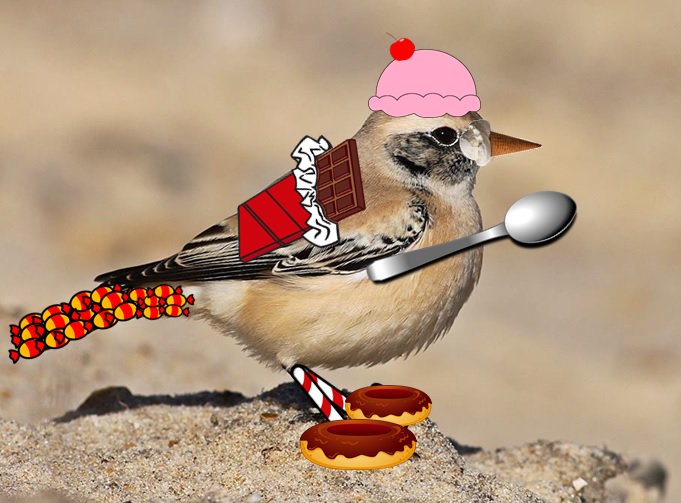
Those of you who enjoy messing around on Twitter might have seen my attempts to rewrite Darwin’s theories by inventing a few bird species of my own. Thankfully, a few other crackpot mavericks – I mean ornithology enthusiasts - have joined me, united by the #Inventabird hashtag. Creations have been diverse, including the Money Buzzard, Dessert Wheatear, Black-throated USB Driver, as well as my own Shearwater Tit, Narwhal Sandpiper, Granny Knot, Fish-tailed Cowcreeper etc. My 9yo daughter has been inspired too, and has contributed with the Spager, a desert waterbird.

My inspiration, such as it is, came from a dream a few years ago. It went a bit like this: I was birding on Fair Isle with some friends, scouring the nooks and crannies for tired migrants, when someone fervently screeched “LOOK! IT’S BRITAIN’S FIRST CURLY WARBLER!!” Of course, I raised my dream Swaro’s, and there it was, a Cetti’s Warbler relative with a bubbly perm hopping around on the floor. And then I woke up, bedclothes akimbo...

 After all, why has Evolution given us the Sunbittern and the Kagu but not the Funny Tern or Swiss Toni’s Warbler? Nature decides, and as a result we are denied the Pants Falcon. So, I thought, why not make it happen? In all honesty, I also wanted to rediscover some of my drawing skills which I had let lapse several years ago, and this seemed an ideal way to get back into the drawing habit. It is really quite amazing how much you can learn about birds from drawing nearly-but-not-quites. I have been experimenting with various media, but at the moment quite enjoy using a fineline pen. Some birds, however, need colour, such as the beer-bellied sandgrouse (flesh pink) for which I have used watercolour pencils.

So – here’s a few images – enjoy. #Inventabird is, as always, a broad and welcoming community, so please feel free to add a few of your own!
Embedded image permalink Embedded image permalink Embedded image permalink Embedded image permalink

Even some NGBs got involved with #Inventabird

Drew Lyness' Dessert Wheater is a personal highlight.

Embedded image permalink

Tuesday, 12 May 2015

Distracted by birds in South Africa - Megan Shersby


Distracted by birds in South Africa, by Megan Shersby


In the last few years, I have been to South Africa a couple times. Whilst I went there for mammalian purposes (studying the behaviour of zebras and then dwarf mongooses), I couldn’t help but be astounded by the beauty and diversity of the birds I saw there.
My favourite of the small birds had to be the Blue Waxbill (Uraeginthus angolensis). With roughly the same size and shape as our familiar House Sparrows, their chest is emblazoned with a fantastic powder blue colouration. Going around in flocks (again, similar to our House Sparrows), they provided small bursts of colour amongst the brown trees of the dry season.

Blue Waxbill (Uraeginthus angolensis)
 At the time of writing, I have not yet seen a kingfisher in the UK. A pretty shocking and shameful absence in my list, and I’ve made it a resolution for 2015 to see one here. However, despite this glaring omission, I have seen a number of kingfishers in South Africa, and they were just lovely birds. I can’t decide whether I prefer the Malachite Kingfisher (Alcedo cristata) or the Pied Kingfisher (Ceryle rudis). Both are beautiful birds and it was fantastic to watch them fishing. Now I’m hoping to see a British kingfisher!
Malachite Kingfisher (Alcedo cristata)
Pied Kingfisher (Ceryle rudis)

Another bird that has a special place in my memory is the Crested Barbet (Trachyphonus vaillantii)! I saw it first on my zebra-watching visit, when we managed to catch one in a mist net. What stunning plumage, and such a character! On my return to South Africa to study dwarf mongooses, I saw this species often. I remember one particular time when I sitting by one of the tree refuges, waiting for the dwarf mongooses to awaken. It was a cloudy day so the mongooses were having bit of a lie-in and I was attempting to plough my way through Les Miserables on my Kindle (a difficult task at the best of times). A Crested Barbet alighted in a tree nearby and we watched each other for a good while, curiousity abounding on both sides and the clicking of my camera filling the silence between us.
Crested Barbet (Trachyponus vaillantii) 
Whilst I didn’t see this next bird very often, my favourite bird photo from South Africa is of this species. It’s the Lilac Breasted Roller (Coracias caudatus), a myriad of soft pastel colours – cream, beige, blue and of course, lilac on its breast. This particular individual struck a fantastic pose within the sun-dappled branches, its eye framed within a beam of sunlight as it cocked its head to look at us. Thinking anthropomorphically, it almost looks like it is frowning a little at us, as if to ask “Well? What are you doing?”
Lilac Breasted Roller (Coracias caudatus)
Where to start with the birds of prey – there were owls, hawks, buzzards and vultures galore. Annoyingly they were often very far above me, and many of my blurry photos don’t even qualify as record shots, so most still remain unidentified. There is one distinct memory I have of a much closer encounter with a bird of prey. This day wasn’t much different from any other day out with the dwarf mongooses. They got up, they groomed each other and they set off for the day of foraging. However, partway through the day, they were foraging close to one of their refuges, when suddenly an alarm call rang out and they dived into the nearby safety. A fraction of a second later, an enormous bird appeared, swooping down by the refuge, a mere couple of metres from me. Then in a blink, it was gone again. I’d had no time to move, or react in any way; it was all over before I could register what was happening! Luckily (for the mongooses), the bird had missed and the group
eventually resumed their foraging. To this day, I still don’t know what bird species it was, but I know that I’ll have the blurred memory of it forever.
African Harrier Hawk (Polyboroides typus) 

Naturally, I couldn’t include all the bird species that I saw in South Africa, the previously mentioned birds are just a small fraction of the variety.

- Megan Shersby 
Want to read more on Megan's adventures in South Africa? Then CLICK HERE!

                                                    ----------------------------------------

Megan Shersby is an aspiring naturalist and science [particularly nature] communicator. She is currently based in Dorset, working as a Seasonal Assistant for Dorset Wildlife Trust at two of their centres. She is passionate about inspiring others to explore the natural world, and can usually be found in nature reserve examining the local wildlife. If that fails, look for the nearest moth trap, as she’ll probably be peering into its depths for the latest catch. You can follow her on Twitter at: @MeganShersby, or via her blog at:mshersby.wordpress.com


Monday, 18 August 2014

All's Fair in Birds and War(blers)

There's a woman with Wallcreeper earrings, a 6ft Hen Harrier made of insulation board and the tannoy is announcing a Death's-head Hawkmoth at the RSPB stand. It can only be BirdFair!


From Thursday night, Armely Lodge Farm became a hub of NGB tents as members arrived from over 15 counties. Two particularly exciting arrivals were 'Bardsey Ben' Porter (who turned 18 on the Sunday of BirdFair!) who spends most of his time taking amazing photographs of the wildlife of Bardsey Island, as well as jamming a few juicy self-finds (most recently Citrine Wagtail) and James O'Neill, a Northern Ireland resident who brought along the now-famous Death's-head, which posed and squeaked perfectly. Both these NGB members were 'ticks' for all of us and it was great to be part of a real camaraderie on camp as stories were swapped, information was shared and bins passed around quickly whenever the Osprey decided to do a flyover. 

Promoting our favourite Hobby with the RSPB

We were at BirdFair in such numbers thanks mainly to both British Birds magazine and the RSPB, both of whom generously offered to form a partnership with us for the weekend. The RSPB had a NGB section of their stand, where existing NGB members met (often for the first time) and young birders from across the country -and beyond- came to sign up. Our membership increased from 376 on Thursday to 392 on Monday morning. Over at the British Birds stand, purple-clad NGB members sold 36 subscriptions of Britain's premier birding journal over the weekend, as well as chatting to a huge number of the birding public. 

Just a few of the NGBs who made it along to the Richard Crossley-led bird walk


The sheer number and variety of stands and marquees boggled my tiny birding brain. It was a cocktail of emotions in those tents, which was accentuated by the high humidity and whiff of grass. I felt assured after speaking to the WWT who are shining a light at the end of the Spoon-billed Sandpiper's tunnel; I felt hopelessness at the Birdlife Malta stall as I was told that shooting a Honey Buzzard is "a right of passage"; and I felt a little starstruck meeting some of my favourite bird artists: Greg Poole, Carry Akroyd and Darren Woodhead. Books were poured over, magazine subscriptions pondered, shiny new scopes peered through while Migrant Hawkers buzzed overhead. I wandered around the crowds, through the "Gone pishing" tshirts and Scopacs, catching bits of conversation on Lincolnshire's Glossy Ibis, IOW's Bee-eaters, England's Hen Harriers (or lack of) and even Norfolk's spiders.

The Saturday of BirdFair will go down in the annuls of NGB history as a simply brilliant day from start to finish. James O'Neill and his Death's-head were the talk of the tents and small queues built up where he lingered. 

Mural for the 26th BirdFair. The theme: Save our seas

At 2pm, a 30-strong gaggle of young birders were accumulating around the ringing tent. The reason? An organised bird walk 'n talk with Richard Crossley, the brain behind the Crossley ID Guides. We piled into the Dunlin Hide, lead by Toby Carter, overlooking the Osprey nesting platform (which bizarrely contained an Egyptian Goose). Chat ranged from the variability of bird plumage and Sand Martins to female Green-winged Teals and "what's that wader on the far bank?". London-based Oscar Dewhurst picked out a Common Sandpiper amongst the Dunlin and Ringed Plover. It was so encouraging to be out with a load of young birders serious about their hobby, with age ranges from 12 to mid 20s.

The always-cool Richard Crossley
I hugely enjoyed the traditional BirdFair Bird Brain of Britain which was well attended and with a recurring theme of Passenger Pigeons (I wonder why) plus a lot of very interesting answers (did you know that Stone Curlew last bred in The Netherlands in 1957? Or that the Madagascar Serpent Eagle actually mainly eats Leaf-tailed Geckos?).

Announcing the winner: Nick Acheson from OSME

Come 6pm the stalls may have shut but the day was far from over as the RSPB and 
The Sound Approach had combined forces for a superlecture! NGB piled in and took up 3 rows of seating. An Englishman, an Irishman and a Scotsman sounds like the start of a joke, but it was a reality on stage as Lush Cosmetic's managing director Mark Constantine, Irish bird artist (and Liam Neeson impersonator) Killian Mullarney and bird sound recorder Magnus Robb took us through their 'Listening for Life' talk. Our ears were treated to recordings of birds as unusual as the Andalusian Hemipode, Zino's Petrel and the recently discovered Omani Owl, which the audience were privy to stunning field sketches and photographs of. 
But for me, it was the warmth that the three exuded to their fellow birders that made me feel like I was in the best club on earth. 
Something that left us beaming was RSPB Chief Executive Mike Clarke who gave NGB a bit of a surprise shout-out as he winded down the evening with a speech. We owe the RSPB a lot! 

(From left) Killian Mullarney, Mark Constantine and Magnus Robb AKA The Sound Approach

For someone who'd been living off ice-creams and snickers bars over the weekend, the free food and drinks reception at the end of the lecture was very welcome. We were also very pleased to get to have a chat to Norwegian NGB Jørgen whose bird ID training and field study trips website can be found here. That evening in the events marquee, all traces of teenage embarrassment disappeared as the barn dance got underway and NGB and AFON members alike were Do-si-do-ing and high-kicking while others looked on and laughed. After that and a few car shuttles later, the over 18 members of both orgs were enjoying a night at Oakham's Wetherspoons where visiting birders appeared to outnumber the drinking locals.  

Meeting Hookpod was very exciting. These guys are the solution to seabird bycatch. 

That's the glorious thing about the BirdFair, the Knot-on-The-Wash like density of birders and stalls means that you can't help but rub shoulders with ornithological big-shots and birding fame alike. First thing you know you're taking part in a harmless barn dance and before long you're in a troupe with 1 Indian bird guide, 2 American world-listers, a wildlife artist and Tim Appleton! Or take Sunday afternoon for example; a few NGBs working on the RSPB stand were approached by Jonathan Scott who asked about hand puppets! For a kid whose mid-week evenings in the early 2000s revolved around making pancakes and watching Big Cat Diary, this was really special.
Any presumptions that come with being a young birder go out the window here as everyone is in the same boat (probably looking for petrels). Simple pleasures came with seeing teenage guys and girls walking about in Bird Obs tshirts, bins bouncing off their BTO sticker-covered chests, no fear of any prejudice they may receive from non-birding peers. 

NGB team working on the British Birds stand hear how many subscriptions they sold. Liam C was top salesman.

So a huge thanks goes out to the RSPB and British Birds, without whom our BirdFair experience would have been all the less interesting. Thank you to everyone who stopped by and told us to keep going, your words of encouragement are really valuable. Thank you to any young birders who have joined NGB since seeing us and thank you to all existing NGB members who helped out, came for a chat or who have motivated us to make the group what it is today.

Best thing about being a birder? You don't have to sit about waiting until next year's BirdFair - we're infatuated with a hobby that changes from year-to-year, season-to-season and day-to-day. See you at Rutland Water in 2015; a year where Glossy Ibis will breed in Britain, the Spoon-billed Sandpiper will be much higher in population and The Sound Approach will probably have found some more owl species in weird locations...

-Jonnie Fisk
Jonnie is an 18 year-old Yorkshire-based birder, invertebrate enthusiast and frustrated artist. When not being oblivious to every local rarity, he enjoys autumn vis-mig, the music of Hall & Oates and being distracted by bugs. 

Saturday, 2 August 2014

Best looking British breeder? - A poll

A quick poll from NGB, where members could add their own suggestions. Criteria - a species that has bred in Britain in recent history.


Montagu's Harrier 9
Dotterel 8
Golden Oriole 4
Blue Tit 3
Nightjar 2
Black-necked Grebe 2
Black-throated Diver 2
Honey Buzzard 2
Ruff 2
Arctic Skua 2
Red-necked Phalarope 2
Bee Eater 2
Common Crane 2
Firecrest 1
Garden Warbler 1
Roseate Tern                       1


I was surprised with the diversity of species, and found that without a bird guide to flick through, I kept bettering my own suggestions the more I thought about it!

The winner with 20% of the vote:
Photo courtesy of Oliver Reville.

How do your favourite British breeding birds compare to our selection?

Wednesday, 12 March 2014

NGB February overview

A belated look back at NGB activity over February 2014, a month where water levels rose, storms rocked the south and heads pointed skywards to an aurora borealis spectacular.
Birdtrack competition


Yearlist competition

*Note: the rankings show the totals of NGB members who have signed up to these competitions.*

NGB combined 2014 yearlist
All NGB members from around the world have clubbed together to record every species to make up a 2014 WORLD YEARLIST!
As for February, NGB members had spent time in no less than 15 countries in 5 continents; from Iceland to Italy, Malta to Malaysia, Namibia to the Netherlands, and have enjoyed seeing every one of the 1114 species recorded on our joint world yearlist. The collection includes some extreme gems such as the Indigo Flycatcher, Crimson Sunbird, Bornean Banded Pitta, Checker-throated Woodpecker, Wrinkled Hornbill, Ural Owl, Cream-coloured Courser and Black Harrier

One bird on this list which deserves a special mention is the White-winged Flufftail, a bird seen by South African young birder John Kinghorn this month during an organised flush for this species, of which minimal information is known. The flush, organised by Birdlife South Africa, aimed to catch, ring and extract DNA of these birds, a tall order, but one which came good when only the 2nd ever White-winged Flufftail was caught and processed in SA history. These little birds are critically endangered and thought to migrate between Ethiopia and SA, though almost nothing of its habits is certain. 

Psychic Jack's predictions ANALYSED
Mystic Bucknall predicted for February: February is a difficult month to focus on, but I do see some sort of rare goose or diver, it looks like a Pacific Diver may be claimed but dismissed immediately, my advice is to not dismiss it so quickly, give it a second look… 
A mini influx of Bean Geese is also ‘on the cards’, get watching those flocks. 

A short, but not entirely false, foretelling. January's Pacific Diver stuck around on its lough in Northern Ireland for another month, and there were murmurs that it had been present much longer before it had been confidently identified... 
A Bean Goose influx was not as noticeable, though small flocks were well spread. 

NGB news
The month got off to a start with a group of NGBs enjoying the delights of Scottish birding, even jamming in on the limelight-loving American Coot during their travels, though many proclaimed that Capercaillie was their highlight.

Not even Mystic Jack could have predicted the first wintering Red-flanked Bluetail for Britain, and several NGBs journeyed to see it flash its tail and even engage in some singing. Durham's Myrtle Warbler was similarly twitched.

The power of twitter proved itself when NGB-er Samuel Perfect posted a picture to our Facebook group, sent by a friend, of an odd Chaffinch, with orange plumage, including Brambling-like wingbars and a curious ginger rump. We speculated on a Chaff/Bling hybrid until we posted the photo onto twitter, only to be told it was a Chaffinch, but a Erythristic one. This word, new to most of us, means that the bird experiences an absence of some pigments and/or an excessive production of others, in this case the pigment for red plumage. 

Remember 2013? Surely a year that will go down in the annuls of birding history in terms of rarities and something of a blessing for us younger birders, who have listened with slightly envious wonderment at the stories told by older birders of the rarity-padded years of the '70s and '80s. For those who want to keep a momento of this Annus mirabilis, Jonnie Fisk (of "This week in birding") has produced a poster which is available online and in store at The One Stop nature Shop, Norfolk; who have developed a very appreciated partnership with NGB. 

Scandinavian influxes are rarely unwelcome, case in point: Waxwings, Nutcrackers, Ace of Base, ABBA...but NGB were particularly pleased with a sudden surge in members from Sweden later on in the month, thanks in part to some the encouragement of 'established' members who have spent time/are currently studying in Sweden.

Extremely exciting news came when 2 NGB members: Zac Hinchcliffe and Jonnie Fisk were invited by the supremely hospitable and always-cool Birding Architect and creator of Biotope, Tormod Amundsen, to attend Gullfest 2014 - the Arctic's premier birding festival. They will do some talks on NGB alongside some extremely impressive birding figures from across the world, as well as enjoying the frozen delights of early spring Arctic birding. 

Not strictly birding related, but towards the dying days of the month, the Northern Lights graced much of the UK to perform a swan song for February. Many NGBs witnessed this ethereal glow on coastlines and elevated sites; maybe a once in a lifetime event for some places. I wonder how many birds were seen/heard during those enchanted moments of shimmering light? How many ears barely picked up the murmuring of estuary geese, the whines of Lapwings settling down, the seeping of some overhead passerine, over the visual feast evolving above them?

Other NGB Facebook Group discussion this month included the upcoming film A Birder's Guide to Everything, bird rings we have read and submitted (Med Gulls from Serbia and Belgium and BHGulls from Sweden and Poland), this fantastic photo, Team Tringa or Team Calidris?, Pheasant-tailed Jacanas and Common Eiders in all their forms!

Did you see?
- 5th: The world's second albatross translocation was undertaken, with Chatham Island Albatrosses (the first was with Short-tailed Albatrosses in Japan). The Chatham Island Taiko Trust transported chicks from the The Pyramid -a rocky outcrop on Pitt Island, and the albatross' only breeding colony- to a site on the mainland in order to create another breeding colony - Why? 'The Pyramid' is thought to be at full capacity. The chicks will be hand-fed and plastic adult albatross decoys have been set to lure in others.
- In other Albatross news, Laysan Albatross Wisdom, aka: the oldest known bird in the world hatched another chick, her 35th on Midway Atoll. The atoll's first Short-tailed Albatross pair also raised their 3rd chick. 
8th: Hot on the heels of last year's crackers Corncrake who made it to an island off the coast of Brazil, a Spotted Crake was photographed enjoying a February sabbatical in the sun-kissed undergrowth of Guadeloupe, Caribbean!  
- The birding/taxonomy/seaduck lover community was tested in its tolerance for unusual theories when a story arose suggesting the extinct Labrador Duck was actually a Steller's Edier X Common Eider hybrid. 
- An unlucky bird smashed through the windscreen of an equally unlucky pilot's plane in Florida, thankfully causing little damage to the pilot who landed himself safely:

...and finally, my NGB Facebook post of the month goes to Samuel Jones, on the topic of his first Sunbittern sighting: how eloquently put!

Good birding to all for March!

Friday, 7 February 2014

It's Friday so here's some surprised owls for you...

"You shall not sneak up on Great Grey Godzilla when he is scaling the Empire State Tree"
©Jari Peltomaki

Einstein-haired Barn Owls show their delight by forming the Tyto version of the three tenors
©Joe Kosack

Rinjani Scops Owl is shocked and appalled that it took you so long for him to be formally described by science.
©Philippe Verbelen

There was that time a bunch of Tengmalm's Owls (gremlins) were interrupted playing sardines 
Source: http://users.utu.fi/ekorpi/tengmalm.htm

This Snowy Owl in Denmark is not pleased to be upstaged by a mere Ivory Gull
© Kenneth Bach Christensen

Elf Owl was not expecting you until 8, and is slightly annoyed that you're early
Source: http://www.factzoo.com/birds/elf-owl-tiny-family-oriented-north-american-bird.html

Powerful Owl didn't see you there...
©Maureen Smith


and one for silliness...

Tuesday, 4 February 2014

NGB January overview

A fond look back at NGB activity over January 2014 (that felt more like an apocalyptic April/waterpark that someone pee'd in: warm, wet and wild...)

Birdtrack competition


Yearlist competition


*Note: the rankings show the totals of NGB members who have signed up to these competitions.*

NGB combined 2014 yearlist
All NGB members from around the world have clubbed together to record every species to make up a 2014 WORLD YEARLIST (*manic evil laughter*). 
As of January, NGB members have travelled to/lived in/visited 8 countries in 4 continents (UK, USA, Austria, Australia, the Gambia, Germany, Senegal and Sweden), and have recorded 401 bird species, though this figure is much higher in reality, as we have not heard from the Australian NGB contingent or the species list of one member's Gambia trip. World highlights: Black Heron, Magnificent Frigatebird, Lappet-faced Vulture, Black Crake, Kittilitz's Plover, Sooty Tern, Long-tailed Nightjar, Boat-tailed Grackle.

...Meanwhile in the grey UK, we are also holding a joint NGB 2014 BRITISH YEARLIST, with the species total at 207 as of the end January. Highlights include: Buff-bellied Pipit, Hume's Warbler, Lesser Yellowlegs and American Coot

Psychic Jack's predictions ANALYSED
For January, Jack foretold: "...good arrival of Arctic divers and ducks, plenty more Great Northern Divers and the odd White-billed Diver claimed... I also see a hazy rare duck on an inland reservoir – a Bufflehead or Barrow’s Goldeneye? Don't forget to feed the cat before that dentist appointment, woman with the green tilley and swaros..."
Did he come good? Well, GNDs have been apparent, and White-billed Divers haven't been hard to come by, especially that Brixham Harbour crowd-pleaser on top of birds at Berry Head (also Devon), Aberdeenshire and Orkney. 
No exceptional ducks were found on inland reservoirs, but Northern Ireland did bag its first Pacific Diver on (inland) Lough Fea, which matches oddly with Jack's prediction for February 2014: "it looks like a Pacific Diver may be claimed but dismissed immediately, my advice is to not dismiss it so quickly, give it a second look…" second looks were definitely on the cards for this show-stopper, who was chinning its strap down to 4 metres to some observers. 
Another exceptional floater (though not a duck) was the British mainland's 4th American Coot and to this day, the purple frontal-shielded little black number has been entertaining visiting birders who have made the long trip up to see it. Could this have been the "hazy rare duck on an inland res" that the great Northern warlock had a vision of? 
ps. I hope the cats were fed and that your teeth are fine, tilley-swaro lady.

NGB news
January blues and Hooternanny hangovers (for those over 18, of course) were blown away by the start of new yearlists, new year's resolutions (to go gulling more, gen up on pipit/wader/bunting calls and to stop at McDonald's less after twitches) and new friendships as many of the British members met up for winter birding trips. 

After the wrenching loss of Hampshire NGB Cameron Bespolka, we were very proud of the few NGB members who attended his funeral in Winchester. Fellow Hampshire birder Josie Hewitt told us "It was a lovely service" and Sussex NGB Luke Dray remarked "There was such a bird related theme to it".
Cameron's parents have set up a trust fund to support young birders; the Cameron Bespolka Trust website explains: "The Trust plans to make grants to teenagers to enable them to work with bird, nature and wildlife organisations". 
Our friends at Patchwork Challenge have dedicated the under 25s minileague -in which many NGBs were participating- to Cameron, with the minileague winner receiving the Cameron Bespolka prize

We enjoyed the news from our Australian NGB members that they twitched Australia's 8th Buff-breasted Sandpiper which involved wading through a swamp "without pants*", a phrase that did not translate well into English English...
(*pants = Aussie trousers.)

Other NGB Facebook group discussion included Orange Bullfinches (don't Google them if you're allergic to adorable), keeping notebooks, your 'perfect birding day', swimming waders, waders in swimming pools and the new BTO president.

Did you see?
- Belarus celebrated its 2nd Grey Wagtail, on the Neman River on the 6th.
-The Netherlands enjoyed its first Brown Shrike. 
- Holland became Hogwarts with the presence of Hawk, Pygmy and Snowy Owls.
- 2 birding films are set to be released. One looks good, the other not so much...
- An American Woodcock in Maryland choreographed its own take of The Champs famous song named after that killer Latin American drink:  

- YLGull and Hooded Crow engaged in a bit of Papal Columbidae-hating in the Vatican.
- Dodo/crow/dinosaur-baby lookalike, the Tooth-billed Pigeon was firmly sighted for the first time in over a decade by a man doing his laundry
- The amazing photographs coming out of the USA Snowy Owl invasion, with these incredible birds perched on window ledges in the middle of cities!

Snowy Owls in Washington DC 
©Darryl Fears ©Brandon Funkhouser

...and finally, my NGB Facebook post of the month goes to Ben Porter, genius: 


 Good birding to all for February!

Thursday, 2 January 2014

Predictions for birding in 2014

Here at NGB, we have something of a Mystic Meg in our midst.
North-East birder Jack Bucknall; a Fea's fanatic who has sold his heart to the wild and rugged St.Mary's Island, has an unusual gift of seeing into the future. Take the 10th of September 2013. Jack took to Twitter, posting a picture of his patch flock of Golden Plovers with a short musing that an American GP amongst them would be nice. Come the 20th, a patchy-bellied, spangle-backed AGP was getting cosy with its limey counterparts on the very same patch of rocks. Lightening struck twice and then thrice when Jack stated with confidence that he'd get a patch Bluethroat and Firecrest this autumn. On September the 25th and October the 2nd, he did!
Not convinced? How about national rares, or even megas?

NGB Facebook group, October 2013: Jack joked about a Yellow-rumped Warbler turning up with the autumn winds. On Lundy Island one materialised. Spurned on by his sudden premonition, we egged him on to guess the next bird. American Robin was his call. As if on cue, a bouncing, Mary Poppins-bothering Yank turned up. We momentarily ignored his earlier call of Cedar Waxwing (bonkers!) when no reports came through. Weeks later, and photographs were belatedly released of a beige berry-addict punk-rocking the Scottish Island of Tiree, whilst our mouths hit the floor. 


This guy was our gold-mine, our very own Zoltar. No more anxiously waiting for positive news, no more waiting it out till the weekend. Mr Bucknall would just give us a time and place and we'd watch the megas fly, the lists grow & our girlfriends/boyfriends/favourite pets become more distant. At least, that's how we imagine it. 


So we've got him here, to do the un-do-able. To predict the whole of 2014, bird-by-bird. Diaries out, ladies and gentlemen, as Jack peers into his crystal fatball...

Jack

I’m here to give an insight to anxious twitchers for this year, it’s a good one, I have seen it. So here goes my ‘wisdom’… 

JANUARY – This month should see a good arrival of Arctic divers and ducks, plenty more Great Northern Divers and the odd White-billed Diver getting claimed on seawatches. I also see a hazy rare duck on an inland reservoir – either a Bufflehead or a Barrow’s Goldeneye? Don't forget to feed the cat before that dentists appointment, woman with the green tilley and swaros.

FEBRUARY – February is a difficult month to focus on, but I do see some sort of rare goose or diver, it looks like a Pacific Diver may be claimed but dismissed immediately, my advice is to not dismiss it so quickly, give it a second look… 
A mini influx of Bean Geese is also ‘on the cards’, get watching those flocks. 

MARCH – One thing strikes me for March, it will be a very quiet month, but with one or two excitements… 
The annual Nutcracker claim will take place in March 2014, in a suburban park with Magpies, I suspect no one will follow it up, but this could be the year of the genuine one? 

APRIL – This could be the start of a very exciting spring, get your twitching money at the ready, I see a rare wheatear taking everyone by surprise, possibly a Black Wheatear or Black-eared Wheatear. Following that, an unusual claim of a Sooty Gull north at Flamborough will get dismissed and raise a few eyebrows, but Filey seawatchers, let me tell you; keep your eyes open, you never can tell… 

MAY – A mad month to say the least. Britain’s first Pied Kingfisher will appear on the mainland and stay for 13 days, only for Britain’s first Spur-Winged Plover to be found 5 miles away, and be a one-day wonder. An influx of Red-rumped Swallows is also looking likely, however let’s hope that my judgement is slightly wrong and the flock of 5 in the Midlands does NOT collide with that lorry on the M1…

JUNE – Another rare month! A Bridled Tern is almost a certainty, whether it is the Northumberland bird on the Farnes, or another bird doing a tour of the east coast, I’m struggling to tell. A Black-Winged Pratincole will turn up on the same day, hugely dividing the twitchers, but I sense the Tern will be a long-stayer. A rare finch (Trumpeter or Citril) is also very possible. 

JULY – The Bridled Tern continues to impress the crowds, while the twitchers who still need it, jet off for the returning Swinhoe’s Petrel on Fair Isle. A ‘twitchable’ Black-Browed Albatross will fly north along the East Coast consistently, allowing all seawatchers fantastic views. Or is that a Little Shearwater? Finally, a panicky report of a singing male Scarlet Rosefinch (present for 20+ days) will eventually hit the bird news services and get the twitchers pulling their hair out once again. 

AUGUST – Autumn begins… A fantastic arrival of Greenish Warblers towards the end of the month will kick start the autumn. A Stilt Sandpiper will undoubtedly make an appearance as is tradition, but who knows which coast?! An impressive influx of Citrine Wagtails will grace Northern Britain with a record breaking 14 on Fair Isle! Great and Cory’s Shearwaters begin to fly past the South Coast, with a Little Shearwater making an appearance towards the back end of the month.

SEPTEMBER – Autumn in full swing! YBWs will tear apart the bushes on the coast starting on the 20th, and a fantastic passage of Great Shearwaters will grace the East Coast, while Leach’s Petrels continue to perform on the West Coast. A Brown Flycatcher will appear in the South-east for a few days, only for an Eastern Olivaceous Warbler to be found in the same spot 4 days later! The Teesside Sharp-Tailed Sandpiper will re-appear for the day, and disappear overnight again, a Northern Parula will appear on Mainland Shetland and be a long stayer for c.3 weeks, with Buff-Bellied Pipit accompanying. Throughout the month, a very strange Lesser Yellowlegs influx will show itself, with birds covering the West Coast, and a few making it to the East Coast. 

OCTOBER – The MEGA MONTH. Siberian Blue Robin, American Bittern, Calandra Lark, Upland Sandpiper, Rufous-Tailed Robin, Alder Flycatcher and Scarlet Tanager to name a few megas that are set for an appearance in October 2014… 
A decent number of Paddyfield Warblers will arrive in Britain early on following some decent winds, and another influx of Pallid Swifts will occur. And who could forget the inevitable mainland male Siberian Rubythroat in the dying days of the month? 

NOVEMBERDesert Wheatears will control this month, with birds almost everywhere! Arctic Warblers will pick up at the start of the month, slowing down towards the middle. A drake Barrow’s Goldeneye will be a long-stayer and allow excellent views for the visiting birders, and the big news will be a photographed and miss ID'd Cliff Swallow, which will only get correctly ID'd 23 days later, and the bird is still present! However, after 5 birders connecting before dusk, no further sign….. 

DECEMBER – The Year comes to a close, and the month is quiet. A Waxwing influx keeps birders interested, and good winds allow arctic species like White-Billed Diver and Little Auks to be seen on seawatches down the East Coast, but unfortunately that is about it I'm afraid. Although the Ross's Gull influx was okay I guess, could have been worse… 

-Jack Bucknall
Jack is an 18-year-old birder with a very keen interest in patching at St. Mary’s Island, Northumberland. He absolutely love seawatching, strong NE winds are his idea of Heaven!
www.whitleybirder.blogspot.com
https://twitter.com/WhitleyBirder

Wednesday, 18 December 2013

Ivories in art through the ages

As December rolls over us, there's been one rarity that's made a gleaming white impression on the newsfeeds of internet scrollers and on the retinas of those lucky enough to see them. Yes, Ivory Gulls

These Northern exiles, carved by Larius, the angel with a penchant for gulling, seem to soil their reputation somewhat with their food choice. Seeing one tucking in amid a mass of rotting cetacean or seal doesn't really appear to do justice to their persil white plumage, delicate blue bills and soft black eyes. Ferrero Rocher and rainbows seem a more suitable diet. However, it lends them to sticking around, which pleases cold-fingered birders, and also means they're getting a square (if somewhat putrid) meal, pleasing to see with a rarity off course. 

This got me thinking, in Britain's (not to mention much of the rest of the world) heydey of routine marine mammal slaughter, were Ivory Gulls attracted? How many English whaling ships were graced by these pearly beauties, drawn by the incessant need for man to have lamp fuel, soap and corsets? How many East Coast fish markets had a gleaming gull slurping down entrails like spaghetti?

With tongue so far in cheek it almost came out my ear, I investigated this by searching the artwork depicting ancient whaling and beaching, and turned up trumps. I wonder if these could count towards rarity records? BBRC, hello?


Ivories in pop culture: A gallery
Beached whale engraving, made by Jan Saenredam in 1602. Are the people flocking for the Sperm Whale or the Ivorys frolicking around it?


Native American art shows hunters pursuing a dolphin. Themselves pursued by a Ivory...

'Cagelot of Potwalvis' 
by Cornelis van Noorde, 1764.
Wow, the birds can even be aged. Nice job Cornelius!


Sam McDowells painting of the whale hunt in the West Indies. I presume this was painted as a 'recordshot' of the 3 gulls. Nice find Sam!

Engraving of a juvenile Ivory in Arctic North America, Right Whale seems to have 'engravingbombed'; a shame.
(on a serious note, the barbaric kind of actions seen in some of these ancient pictures still occurs in some 'developed' nations today. For more information visit: http://uk.whales.org/)
-Jonnie Fisk
Jonnie is an 18 year-old Yorkshire-based birder, invertebrate enthusiast and frustrated artist. When not being oblivious to every local rarity, he enjoys autumn vis-mig and being distracted by bugs. 
https://twitter.com/jonnie_fisk